We discuss the origin of Prismode & Solvane, Ritter Butzke and Berlin clubbing ahead of their arrival for another Ritter Butzke take over.
Ritter Butzke is a Berlin clubbing institution that has been a touchstone for electronic music beyond Techno in the German capital and beyond. Nestled in über-cool Kreuzberg, its unique atmosphere and warm industrial charm has been a highlight on the city’s nightlife scene since its inception back in 2007.
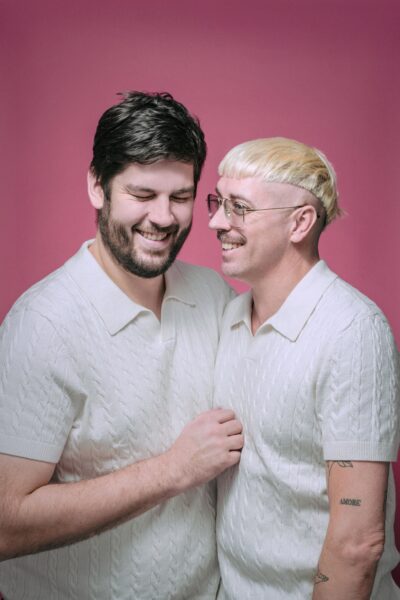
Starting life as an illegal party, Ritter Butzke has grown as a legitimate clubbing monolith with multiple floors, a record label, a radio station and travelling event showcase. At the heart of much of this creative drive sit David Kreutzer (Solvane) and Robert Wiedemann (Prismode).
As Prismode and Solvane, they are the residents that make up a chunk of the club’s weekly programme and the artistic steerage behind the club’s sound, but as David and Robert they also manage much of the club’s business behind the scenes. “We both work on the other side,” explains Robert. They handle “everything artist related” with a “hands-on-mentality” that is closer to artistic collective than a club.
They’ve just come back from a packed ADE programme where they split their time between industry meetings and their annual sold-out boat party. “Wind, rain and beer” dominated their weekend at ADE, according to David who found himself wading through “rivers” from meeting to meeting and then the party.
Both David and Robert manage to look rested over a video call. Robert is in a very tidy, to the point of sanitised, Rutter Butzke office, while David is phoning from home. A neon light flickers in the background as David pans around his contemporary furnished apartment, while Robert finds a chair.
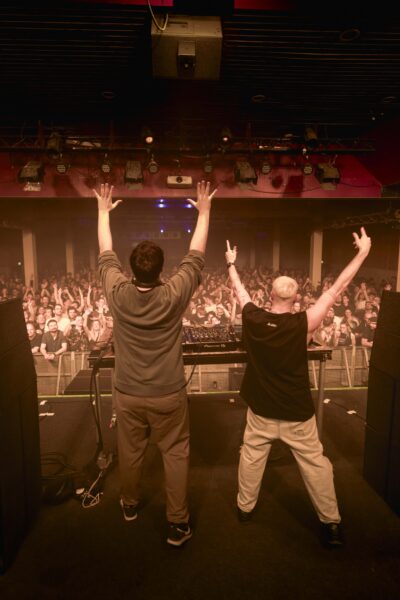
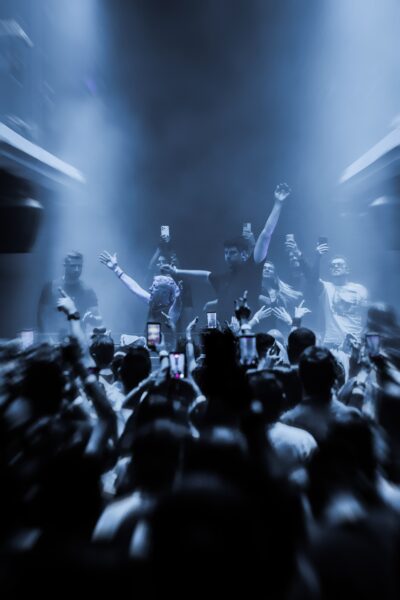
The last time I saw them together it was a completely different setting. They’d just stepped out of the DJ booth at Jaeger, perspiring in the cold February air after delivering a highly energised set for their debut at Jaeger. Playing to our intimate crowd like they were playing to a thousand people, their collective spirit seemed to have buzzed through the venue like a shockwave.
As they’re about to prepare for a repeat of that momentous occasion in November, we give them a call to find out a little more about this enigmatic clubbing duo, Ritter Butzke and nightlife culture in Berlin.
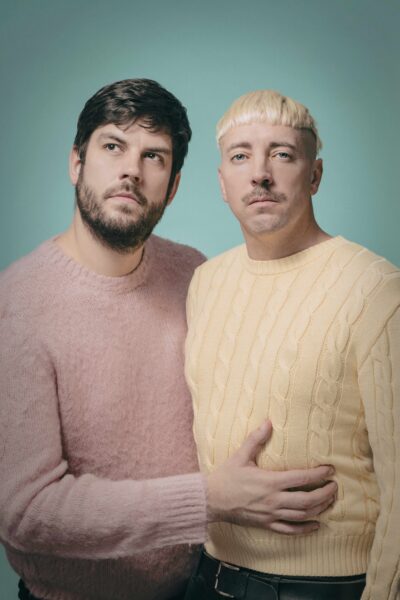
How did you two meet and how was Ritter Butzke involved in that meeting?
Robert: You can’t ask us this question; it’s the only one we are not prepared for. (laughs) The story of where and when we met is unknown. We don’t know exactly. All we know is that we met in the subculture of Berlin’s nightlife, but the specifics are lost to history.
David: It’s round about 13-15 years ago. We had other musical projects and were part of other labels. As it happens, you tend to meet backstage at some parties and as time goes on you see there is a connection. We were both part of DJ duos before and they both stopped at the same time and it opened doors and opportunities for our own solo projects and to do things together. We had the same vision of how to take that into the electronic music scene and do some parties. Our idea of a good night felt to be quite similar.
Robert: We were part of an artist collective. David was one of the most passionate members of the collective and this I think brought us together.
David: We were effectively the last two guys standing, the rest disappeared. (laughs)
Is that when your story starts getting intertwined with the history of Ritter Butzke?
Robert: The club had existed for a while before they asked us to join. There was a generational shift at that time and they were looking for new members to join.
David: We started as residents there at first and then they opened it up for us to do more.
What was Berlin like at the time?
David: I would say electronic music was more divided into genres. It wasn’t as fluid as it is today. This has changed a lot since then. There is an openness with venues and DJs today.
When you were starting out at Ritter Butzke, was it still an illegal event?
Robert: We were around, but we weren’t the driving part at that point. We were the party guys. We all found each other eventually by a mystical power. We followed our heart and were surrounded by people that we like and respect. From this we developed into the future. Focussing on what we feel, it’s just not limited to music today. We want to be on tour with some of the musicians and that’s why we push these showcases.
And I imagine the purpose of these showcases is to export the sound of Ritter Butzke. How would you define that sound?
Robert: I would say it is somewhere between electronica and peak-time Techno. For example we did a show in Amsterdam which started with Christian Löffler, then there was Booka Shade, followed by a live set from Dominik Eulberg and then we played in closing. We try to explore different ideas.
It’s the same for the label. We’ve released music from Stimmung, Booka Shade and Dominik Eulberg.
David: It brings it back to what I said earlier about when it started with these hard defined borders within electronic music, when it was more necessary. Now people are more open and it’s more a question of quality than a certain field. If it’s good they’ll like it regardless. Times change and you have to follow the times.
Was this idea already established when you guys stepped into the club as residents or was it something evolving around the community there?
Robert: I feel the community is changing all the time, and needs to be redefined all the time. That’s also why we don’t limit the brand just to ourselves. We are obviously a big influence in the whole development, but we also don’t want to be too strict. Just because I don’t understand the sound from the first time, it doesn’t mean that it shouldn’t exist. That’s why I’ve been trying to open to different music again and again. For instance this new Bounce trend has influenced all of us, and particularly me to play faster.
David: We don’t have to follow the trends, and hunt them. But you have to be open to at least being influenced by it and find your way to deal with it.
You answered a question there I was meaning to ask; how much does playing and working in that environment influence what you do? Is there any point at which you will draw a line and say perhaps this is not for me?
Robert: I’ve had this line and it’s shifted again and again. Like this whole Hard Techno trend. When it started, I didn’t quite understand it, but seeing it develop and being a part of events and festivals where they were playing that kind of music, it put it in perspective and gave me some fun moments too. I wouldn’t have expected David and I to stand at the Hard Techno stage at Sea You festival a few years back, but now we can enjoy it.
Do you ever feel that you have to adapt constantly to these new environments because of the club?
David: I don’t feel that. It comes naturally because I have an interest in music. For my weekly radio show I have to deal with all the trends, and while I like some of them, some of them I don’t like. At least I check all of them. I haven’t for example adapted to this Bounce trend currently happening. It’s just not my thing. I’m happy it exists and I’ll even have Bounce DJs in my radio show, but it doesn’t influence me as an artist or a DJ.
Robert: Maybe it’s also that you don’t always feel it when it’s happening, because it’s happening in such a small surrounding. For example, I felt that people were just getting used to a higher BPM range, because it’s surrounding them.
That’s what brings me and David together, we have the same vision of where we want to get together with everybody on the floor. I’m super surprised that we’ve had this nature all these years and we haven’t broken up yet.
David: We’re not married, right (laughs). We also develop in very similar directions at times, and at others, away from each other. I remember I had a period where I played more techy stuff and Robert more melodic stuff, but it always comes together somehow and it’s always close enough that it’s pretty interesting back-to-back. It gives a whole new positive side to our back-to-back.
Robert: What I learnt from David is a respect for each other and to give some stuff a chance. There are definitely tracks I would dismiss after 30 seconds, but also there’s the other perspective from David on the dance floor that also helps to push my limits.
I think that respect comes from working in that situation behind the scenes in a club where you get DJs to play that might not be in your immediate circle of influence, but that has some common ground with your audience.
Robert: I’ve been in the situation where I was unsure if the DJ would be the right fit and in the end the audience loved them. Also on the other side, we’ve had some established names with high expectations and it never connects. It’s always interesting to see what these social media hypes and bubbles translate into reality.
David: It’s super interesting to see how it works live. When you see something from the internet in our club and in our living room, I’m often surprised in a positive way how cool the vibe is, even though it’s not the music I would want to play. You can completely understand why people are into it.
Robert: It’s electrifying for me, this feeling of discovery and then you get these magic moments when you can feel the energy in the room. This is what I strive for.
We spoke earlier about your roles behind the scenes, and it appears that you both take on various roles in a sort of fluid approach to running a club. What are the advantages of operating Ritter Butzke in that way?
Robert: I think these fluid situations also helped us survive. As one person you have your limitations. And from time to time, we all need to be pushed out of our comfort zone. You can never expect night-life trends, like I would have never expected this current kinky vibe in Berlin.
I thought Berlin has always been a bit kinky. Or are you saying that’s coming to Ritter Butzke as well?
Robert: You can see that fashion aesthetic going into the mainstream. It’s quite interesting that some of our colleagues from Kit Kat club are asking for more diverse fashion and it’s not just limited to black and leather.
That leads me to Ritter Butzke’s space in Berlin’s wider scene. Berlin has been a Techno destination for many this last decade with Berghain or Tresor dominating a lot of it . Where do you find yourself within that space today?
David: It was never really limited to Techno. Next to the ones you mentioned there was always Kater, Bar 25 or Watergate. It was a general electronic music capital for Europe and we could discuss whether it still is, but it was and we were and are definitely a part of that. Some of the clubs that had a leading role are no more, and we’re still there.
How have you experienced this change in the clubbing landscape in Berlin?
Robert: I would say there definitely has been a change, but these are things happening all over western Europe.
David: The economic struggles over all of Europe has had a big effect. It’s everywhere.
Robert: There’s this uncertainty about the future. I would say that the hedonistic bubble in which I grew up in Berlin’s nightlife is not there in general. Everything feels less secure. For young people, they are dealing with topics like going to the military. This affects everything. Haven’t you experienced any of that over there?
Yes, in a way the clubbing culture as a lifestyle seems to be less obvious, but we have also seen that during times of uncertainty – like with this period or with covid – there are those people that just look for that escape.
David: Which is great that you can offer something like a few hours of complete freedom for the mind.
Robert: These are things we feel in Berlin too, and hopefully this will get better.
This too shall pass… And for now let’s look forward to your upcoming night at Jaeger. You’re coming to the basement for the second time this year. You’ve got Teenage Mutants coming with you on this occasion. Why have you asked them along?
Robert: They’ve been closely connected to the club for several years and they also now live in Berlin.
David: They are real Techno guys now. (laughs)
Robert: We have a long history together.
David: Also we as DJs have been connected to them for years. As producers we’ve released on their label and we respect each other as artists. It’s a multi-connection.
Robert: After the success of last time, we’re super happy to bring them.
David: And it’s also about showcasing new stuff to Oslo
Yes, it’s very rare that we get the same people back in the same year, which stands as a statement to your effect on us. For people that perhaps weren’t there the last time or those that are coming again, what should they expect?
David: This is definitely going to be something else than the last time. There’s a development. Teenage Mutants are definitely a little faster, but you never know. They are also developing all the time with their new release on Diynamic. They are a little more melodic now, which is super cool for us, because I like the new release and it’s closer to what we do.
Regardless, you’ll bring the party…
Robert: Yes, like the last time with you guys it was so much fun.
David: We enjoyed it so much and the vibe was amazing and I’m pretty sure it’s going to be even better.